

Loyalty programs were designed to create sustainable relationships between brands and users. In practice, many have devolved into fragmented point systems, low signal engagement, and short term incentive loops. In Web3, these issues are amplified. Airdrops are routinely captured by bots and disposable wallets, activity is inflated without retention, and genuine users are buried in noise. The result is clear engagement without loyalty, and incentives that fail to translate into trust or long term value.
There is a different path forward. One where loyalty is private by default, verifiable without unnecessary exposure, and designed for an environment where both users and AI agents interact onchain. Not surveillance driven engagement, but confidence driven participation.
The Horizen x Thrive Builder Funding Program continues to highlight teams building toward that future on Horizen’s privacy first infrastructure. With sixteen approved projects in progress and additional teams under evaluation, the program reflects growing momentum around confidential, verifiable applications that businesses can actually deploy.
For our second builder showcase, we are featuring Gatta. Gatta is a next generation loyalty system rethinking customer engagement from first principles. By using zero knowledge proofs, verifiable credentials, and privacy preserving infrastructure, Gatta enables brands to reward real behavior without tracking, spam, or artificial activity. It’s a practical example of how privacy can restore trust, signal confidence, and make loyalty systems work again.
To go deeper into how Gatta is being built and why privacy is central to its model, we spoke with the team about their approach to loyalty, verification, and real user engagement.
1) In one or two sentences, how do you explain Gatta to someone who has never heard of Web3 or tokenized loyalty?
Gatta is a next-generation loyalty system that rewards real engagement automatically across brands, apps, and devices, spanning both Web2 and Web3. It enables companies to recognize genuine customer behavior in a fair, privacy-preserving way, without users having to manage points, apps, or sign-ups.
2) What was the moment when you realized traditional loyalty programs were fundamentally broken and worth rethinking from scratch?
The turning point came when we saw the same failure repeat across industries: loyalty programs were optimizing for surface-level actions rather than real engagement. Dissatisfied customers with brands repeating the same transactional model to attract customers. In crypto, this flaw was impossible to ignore; airdrops were consistently drained by bots and sock-puppets, creating short-term activity with no trust, no habits, and no actual lasting user retention in Web3 communities.
At the same time, AI agents and blockchain have converged in a way that fundamentally reshapes how people can interact with products today. AI can now act on users’ behalf, while mature blockchain infrastructure enables trustless coordination between brands. It became clear that loyalty wasn’t a tooling problem but a structural one, designed for manual participation in a world moving toward automation, context, and privacy. That realization led us to rethink loyalty from the ground up and build Gatta.
3) What has been the hardest problem to solve so far while building Gatta: technically, commercially, or conceptually?
Conceptually, the hardest part has been anticipating how brand engagement will evolve over the next 5–10 years and designing for how the customer would actually want to interact in that future. Technically, building privacy as a default, not an add-on, has been a major challenge. It requires rethinking the entire product architecture around privacy-first principles. Commercially, while we’re not fully there yet, onboarding large brands will come with its own set of challenges, from longer sales cycles to aligning incentives across stakeholders.
4) What’s one assumption about loyalty or customer engagement that you had early on that turned out to be completely wrong?
Early on, we thought brands could build a loyal user base just by handing out freebies. Turns out, real engagement isn’t about what you give. It’s about creating meaningful, trust-based interactions and relationships that people actually care about — which generate emotional experiences.
5) Who is behind Gatta? Can you briefly introduce the team and what each of you brings to the project?
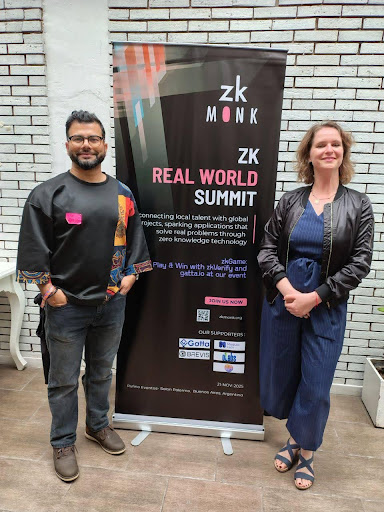
Saif Akhtar is the founder and CEO of Modulo Labs and visionary behind Gatta. With over 20 years of experience building large-scale software solutions, he has a proven track record in Blockchain, Privacy, and Zero-Knowledge innovation. With a background in Mathematics and Computer Science, Saif enjoys tackling complex challenges and turning them into products that make a real-world impact, while shaping the company’s vision and keeping its technology at the cutting edge.
Dr. Ann Brody, Co-founder and COO of Modulo Labs, brings a strong academic perspective to the team, with pioneering research in decentralized governance and DAOs. Having studied blockchain ecosystems and community dynamics for many years, she has identified systemic challenges that hinder engagement and trust in Web3. Ann applies this understanding to shape Gatta’s innovation and guide its voice in the market.
6) Building new systems is rarely smooth. Can you share a challenge or setback that forced you to rethink your approach?
Working with niche technologies such as ZK and TEEs introduces unique budget and resourcing challenges, from limited talent pools to higher R&D overhead. To address this, we’ve intentionally built a lean, expert team designed to move quickly and deliver meaningful results.
7) Privacy and verification are often seen as trade-offs. How does Gatta balance user privacy with the need for trust and verifiability?
Gatta removes this trade-off by separating proof from disclosure. Using verifiable credentials and zero-knowledge proofs, users can prove eligibility for rewards, such as being a real participant, meeting certain criteria, or holding a status, without revealing personal data. This allows brands to personalize offers and prevent fraud while staying compliant with privacy regulations, and lets users receive meaningful rewards without being tracked or profiled.
8) What’s something fun, unexpected, or slightly weird that happened while building Gatta that most people wouldn’t know about?
From the outset, we were driven by a fundamental question: what would a loyalty program look like if it were genuinely human-centered while preserving the core Web3 principles of user ownership and autonomy? As agentic systems become increasingly prevalent, Gatta is well positioned to operate within this emerging landscape. At the same time, we remain committed to ensuring that technological advancement enhances, rather than undermines, the human experience. To get Gatta right, we obsessed over small details like language — interactions most users would never notice.
9) Where is Gatta today in terms of product readiness, and what’s the next concrete milestone you’re aiming to ship?
The first version of Gatta is launching this month in January, which will allow for running on-chain verifiable, privacy-preserving marketing campaigns for brands.
Next concrete milestone: addition of cross-chain capability.
10) Looking 12 months ahead, what would “success” look like for Gatta, both for the team and for users?
Success would look like real usage and traction. We’d want to see over 100 Web3 brands actively running One-Time Campaigns on Gatta, alongside a clear, validated solution for Web2 brands and partnerships in place with at least five leading companies. On the product side, success means completing the Gatta token launch, having Brand Reputation Staking underway, and operating a live AI-driven workflow with an MVP that’s already delivering value to users.
11) Why did you choose to build within the Horizen ecosystem, and what advantages does it give you compared to other options?
Two main reasons. First, Horizen has strong support for privacy-preserving tech like ZK and TEEs, which are core to what we’re building. Second, it’s low-cost and scalable, so we can experiment, iterate, and grow without unnecessary overhead.
12) If you could fast-forward to a future where Gatta is widely adopted, what changes for brands and customers compared to today?
In a widely adopted future, loyalty becomes more open and transparent, with Web2 and Web3 working seamlessly together. AI agents help guide purchasing decisions, applying loyalty points where they’ll earn the most rewards. Brands can confidently reward real engagement using verifiable credentials and zero-knowledge proofs, while customers receive rewards without exposing personal data or being tracked. The result is a cleaner, more trustworthy ecosystem where loyalty programs foster genuine, long-term relationships rather than short-term extraction. Overall, loyalty evolves from being purely transactional to experiential and emotional.
13) Is there anything you’d like to say directly to the Horizen community, and supporters following your journey?
To the Horizen community and everyone following our journey, thank you for believing in Gatta. We’re excited to keep building, learning, and growing this community together.
Follow Gatta
: https://gatta.io/
𝕏: https://x.com/GattaRewards
Stay tuned for the next Project Showcase as we continue to highlight the teams building on Horizen through the Thrive Builder Funding Program.